
by Stone Mims
To Mwila, C.T, N.R. and other Black students:
As you walk across the stage on this mild, Michigan afternoon, I feel an immense pride; I feel an immense sadness. This double consciousness results from the complicated situation of your coming of age. On one hand, as I look into your bright, young faces, I see all the excitement and optimism you hold towards the future, a future that you have, by all rights, earned and I cannot help but share in this sense of celebratory victory; I can feel even now, something like a hearth warming the world as you throw your caps into the air. On the other hand, I have seen what is happening on college campuses and I know that many of you will be joining your peers in protests and counter protests. I am forced to think of you marching against the institutions of this world while I watch you stumble across the graduation stage and I cannot help but reflect on the circumstances of my own youth. It was a dire time then; it is a dire time now.
I was Twenty-two years old the first time I protested against the will of my country; they had just murdered George Floyd, Ahmaud Arbury, Breonna Taylor. Of course, these were not the only murders; hundreds of Black and Brown individuals are assassinated in the shadows—behind the prison bars, in the ghettos, and the other crevices of society, but the aforementioned murders are the ones that caught the attention of the world due to the callus and egregious manner in which they were carried out. Ahmaud was killed by white vigilantes while on a morning run; Breonna, like the late Fred Hampton, was executed in her own home and I find it especially hard to describe to children exactly what they did to George for eight long brutal minutes of American history. The morning I decided to raise my voice in opposition to the killings, I called my mother to let her know I was going. Afterwards, I called my father. And then my grandparents. I could not bring myself to call my sister because her tears may have wet the fire in my soul enough so that I would not go. I imagine they all cried that morning. I think my grandfather was the only one who understood why I felt the need to rebel. My grandmothers, father, and mother just wanted me to survive the world as it is; but my grandfather understood that survival without dignity is just another form of death. I want to make this clear to you now, while you are still young. While the majority of Americans, white Americans, pursue happiness, much of the Black experience is dogmatically centered on the pursuit of dignity.
Before we, myself, a Black man, Momo, a Yemini, Sage, a nonbinary person, and Divya, an Indian woman, struck out to the NYPD Headquarters, I made sure to take the thickest, stinkiest sharpie I could find and write, in sprawling, frantic font: UNARMED. I wrote the word in block letters down my left and right arm. I wrote these words because I am not a fool; I know what the police of this country are willing to do to my body. I know because my country was built on the bloody bones of the peaceful and violent alike. After all, Martin and Malcolm bit very similar bullets. At age twenty-two, I had learned a sort of inverted curriculum; I knew very much what I was willing to die for long before I’d ever given any real thought to what I wanted to live for. Upon reflection, students, I cannot exactly explain to you how I had, at such a young age, found myself so willing to give up a life that I’d only just slid comfortably into.
I can also tell you that I did not plan to become a teacher; I was never one of those schoolboys who went to bed at night dreaming that one day, I would be the one leading the classroom discussions instead of participating in (or sleeping through) them. I had always hoped—assumed even—that by the time I came of age, I’d have successfully written a few novels, maybe even one best seller. I’ll even go further and admit that when I first began with you all, my first cohort of students, that I viewed my role as faculty as little more than a means to fund my artistic dreams. However, in congregating with you all every morning, discussing literature, humanity, and the circumstances of our world, I have learned the value of making connections with the next generation. It is all too easy, as an adult, to become complacent in, and therefore complicit with, the status quo. After all, I have no children, and so for a very long time, the only person whose dreams I had to consider were my own. But now, because I’ve become invested in your lives, I am reinvigorated in pursuing a better world for you to live and thrive in. I have rediscovered, through your own burning ambitions, my will to fight for an optimistic future.
As your teacher, I know that many of you are just as captivated by a sense of justice. I can see that now even as you walk away from this campus, many of you will, perhaps too early, learn what it means to place your lives on the line for your beliefs. I know that many of you are confused. How is it possible that so many people can be killed in Palestine without any intervention? How does our world continue to spin when the bombs are breaking apart Rafah? And why are our teachers silent? I know you are asking yourselves these questions. I’ve heard you whispering in the lunchrooms and in those short moments before the bell rings and I hope to answer these questions as concisely as possible. First, the world did not fall out of order on October 7. October 7 was a tragic day, but it is far from the first tragic day. The histories that intersect through Israel and Palestine precede you, me, and our grandparents.
Further, the conditions of the Gaza strip have been unbearable for several decades now, but the solipsistic gaze of the American audience would have you believe that these problems came into existence recently. Still, the truth is, the genocide (and yes, my dear students, it is genocide—though many will try to convince you that the seventeen thousand children who have been killed in Palestine are “collateral damage” in a moral cause) is something that we are all, unfortunately, responsible for. Angela Davis, in Freedom Is a Constant Struggle, outlines the ways in which we are all inextricably linked in the mutual fight towards liberation. Our people, Black people, cannot truly be free while others are oppressed because that oppression, like much of the oppression in the world, is inspired by the same ideology that inflicted Jim Crow terror upon your grandparents.
That said, I have one final lesson to impart to you, one that I myself am struggling to learn. Your generation is gifted with a noble and pure sense of justice, but do not let that passion become the basis for hatred against anyone—even those who you may see as obstacles towards liberation itself. There are many ways to be anti-Black in this world, but one of the most profoundly sinister is to assign criminality which is, in the American doctrine, a label that erases the prospect for redemption, reform, and hope. I often struggle here because this advice is counter intuitive. I am asking you to vehemently and inflexibly hate oppression whilst empathizing with those who oppress. I know that I am asking the impossible, but as your teacher, I know that you have the wit to figure it out.
With all the respect in the world,
Your Teacher
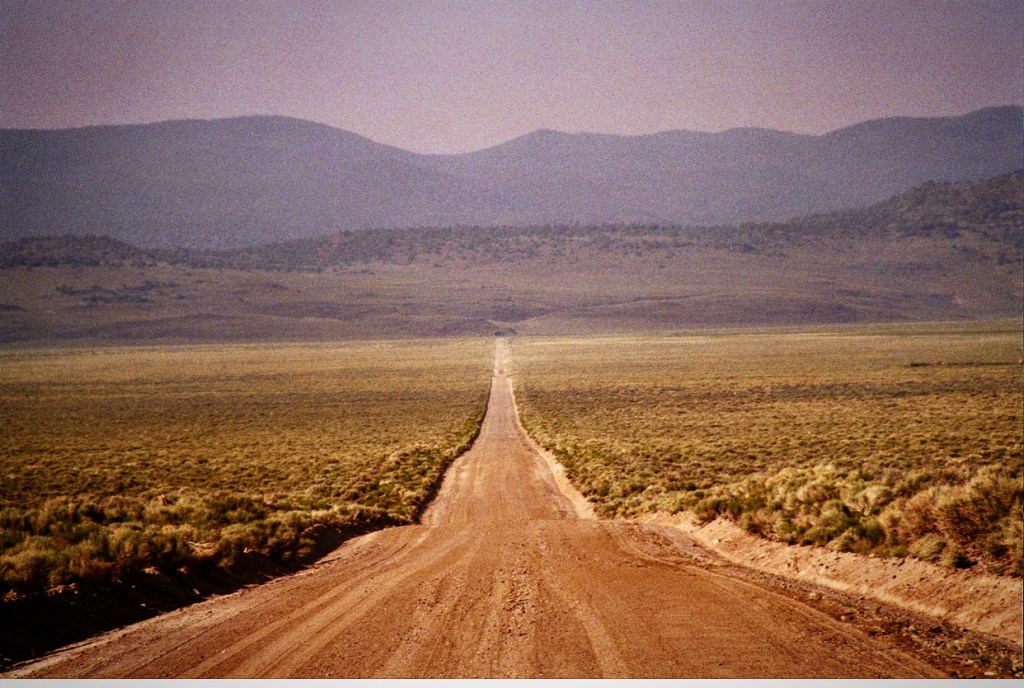
Dirt Road Mojave California
by Lawrence Bridges
Stone Mims is a writer and educator based in Northern Michigan. He possesses a BA in literary studies and creative writing from Bard College and an MFA in creative writing from The New School. Much of his work, whether in the classroom or on the written page, focuses on the Black experience in America.
Lawrence Bridges is best known for work in the film and literary world. His photographs have recently appeared in the Las Laguna Art Gallery 2023, Humana Obscura, the London Photo Festival, Light Space & Time Art Gallery, and the ENSO Art Gallery in Malibu, California. He created a series of literary documentaries for the National Endowment for the Arts “Big Read” initiative, which includes profiles of Ray Bradbury, Amy Tan, Tobias Wolff, and Cynthia Ozick. He lives in Los Angeles. You can find him on IG: @larrybridges

 Ignatian Literary Magazine